

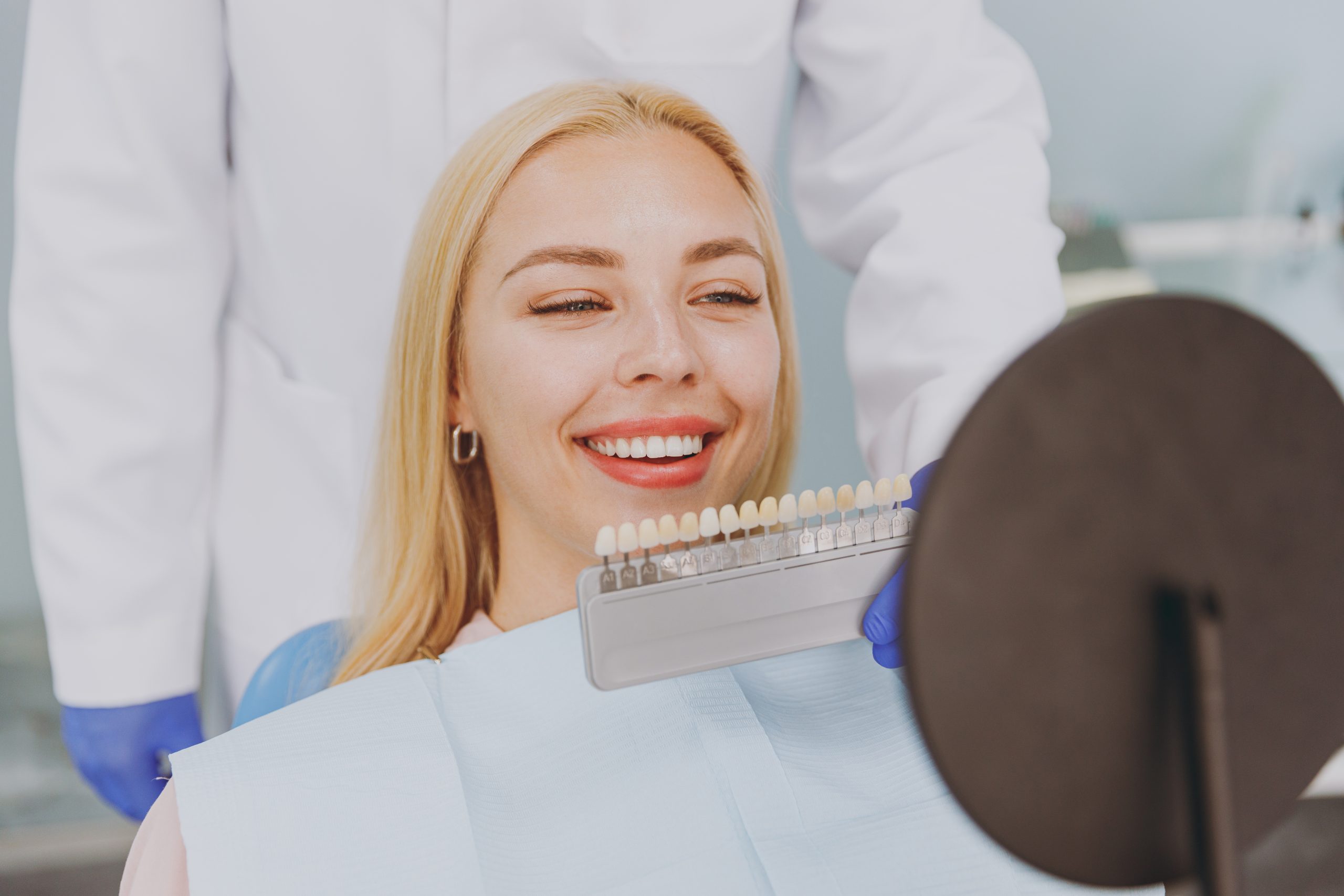
When weighing no-prep veneers vs. traditional veneers, the core difference comes down to how much of your natural tooth structure needs to be modified before placement. Traditional porcelain veneers require removing a thin layer of enamel so the shell sits flush against each tooth – making the process irreversible. No-prep (or minimal-prep) veneers bond directly to the front of your teeth with little to no enamel removal, preserving more of your natural tooth and offering a more conservative, often reversible solution. Both options can produce stunning, natural-looking results, but the right choice depends on your tooth condition, your aesthetic goals, and how conservative you want the treatment to be.
Dr. Victoria Veytsman, a cosmetic dentist practicing in New York and Beverly Hills, uses advanced smile design technology to help patients visualize both options before committing to either one.
Dental veneers are ultra-thin, custom-fabricated shells designed to cover the front surface of your teeth. They address a wide range of cosmetic concerns – chips, cracks, discoloration, gaps, uneven edges, minor misalignment, and worn-down teeth. Because they’re bonded directly to the tooth surface, veneers look and function like natural enamel when designed and placed correctly.
Traditional porcelain veneers – sometimes called “prep veneers” – are the gold standard for achieving a dramatic and comprehensive smile transformation. They are handcrafted from high-grade dental porcelain in a specialized lab and custom-matched to your desired shade, shape, and translucency. The porcelain masterfully mimics the light-reflecting properties of natural tooth enamel, which is why high-quality veneers are virtually indistinguishable from real teeth.
The defining characteristic of this approach is the preparatory phase. A very thin layer of enamel – typically about 0.5 mm, roughly the thickness of a fingernail – is gently removed from the front surface of each tooth. This creates the space needed for the veneer to sit without looking or feeling bulky and provides a strong bonding surface. Because of this enamel alteration, the process is considered irreversible – once you commit, your teeth will always need to be covered with a veneer or similar restoration, such as a crown. This option is ideal for patients seeking to correct more significant issues, such as deep-set stains, noticeable gaps, or moderate crookedness.
As the name suggests, minimal-prep veneers – also known as no-prep veneers – represent a more conservative approach to smile enhancement. These veneers are fabricated from advanced porcelain or ceramic materials that can be made extremely thin, sometimes as thin as a contact lens (as little as 0.2 mm), while still maintaining strength.
Because little to no tooth structure is removed, the placement process is less invasive – in many cases, there is no need for local anesthesia. The term “no-prep” can be slightly misleading; in some cases, a small amount of surface modification is still required to achieve an ideal fit and aesthetics, which is why Dr. Veytsman and many cosmetic dentists use the more accurate term “minimal prep.”
Because the underlying tooth is left intact, the process is often considered reversible. No-prep veneers are suited for patients who already have relatively good tooth alignment and are looking for more subtle cosmetic changes – correcting minor discoloration, small chips, slight gaps, or inconsistencies in shape and size.
This is the single biggest distinction between the two options.
The timeline and steps involved also vary between the two options.
Both traditional and minimal-prep veneers are typically made from dental-grade porcelain or advanced pressed ceramics. The primary difference is thickness.
Certain brand-name systems (such as Lumineers) fall under the no-prep or minimal-prep category, but the specific materials and techniques vary by practice. Dr. Veytsman selects materials on a case-by-case basis, prioritizing natural light refraction and longevity.
With proper care, both traditional and no-prep veneers are remarkably durable, long-term solutions.
Maintenance for both types is straightforward: regular brushing with a non-abrasive toothpaste, flossing, professional cleanings, and avoiding habits like biting ice or opening packages with your teeth. Neither type is prone to staining the way natural enamel or composite bonding can be.
Traditional veneers:
Minimal-prep veneers:
This is exactly why a thorough consultation, including digital smile design, matters. AI-powered imaging helps identify which approach will deliver the most natural, balanced result for each individual patient.
The debate around no-prep veneers vs. traditional veneers doesn’t have a one-size-fits-all answer. Traditional porcelain veneers remain the go-to for comprehensive smile transformations that require significant reshaping or masking of discoloration. Minimal-prep veneers shine when your teeth are already in good condition and you want to refine your smile without altering healthy enamel. In many cases, the ideal plan blends both techniques across different teeth.
What matters more than the category of veneer is the precision of the planning. Dr. Veytsman uses AI smile design technology to digitally map each case, ensuring that every veneer – whether traditional or minimal-prep – is designed to complement your facial proportions, lip line, and natural tooth characteristics.

About the Author
Dr. Victoria Veytsman, DDS
12.06.2026