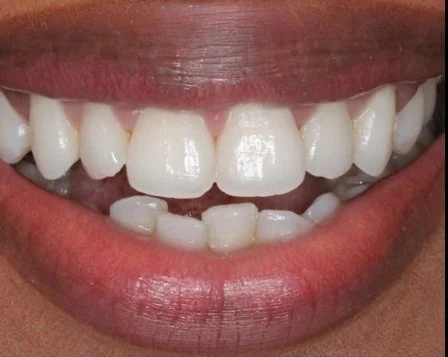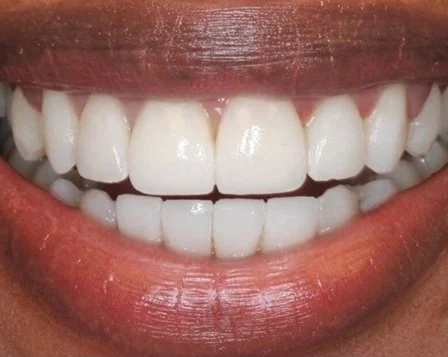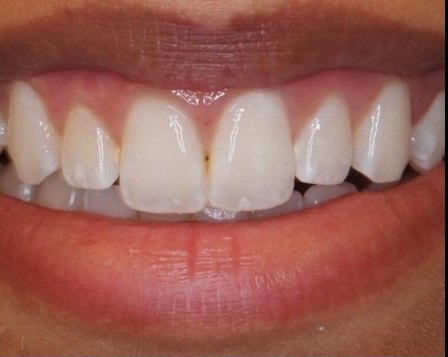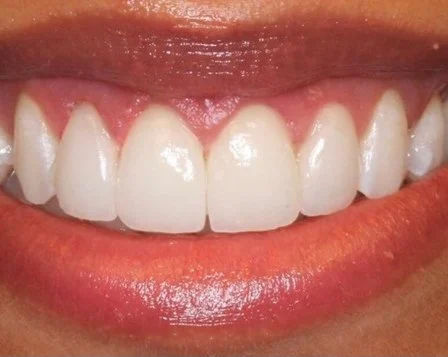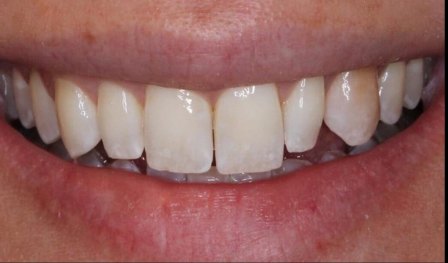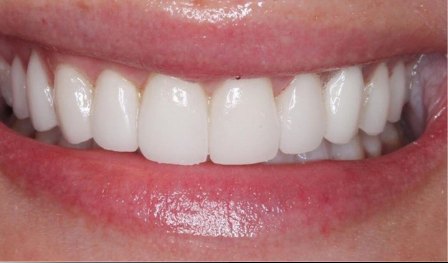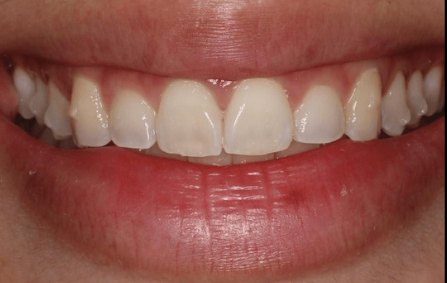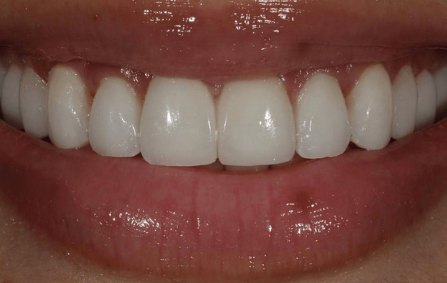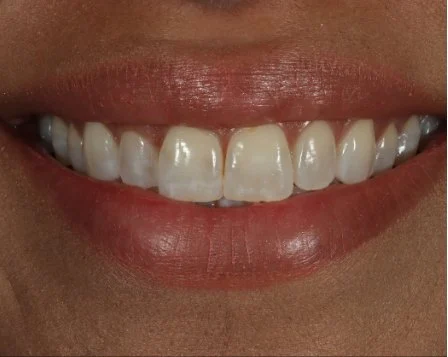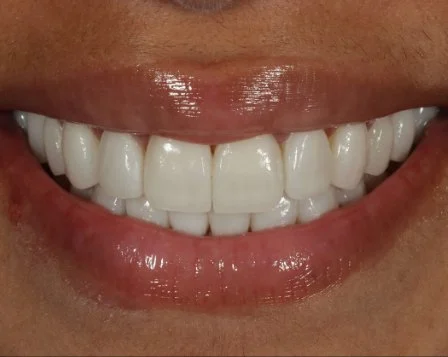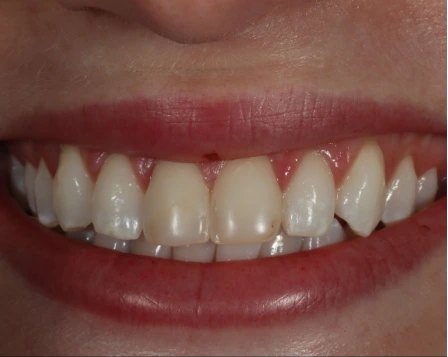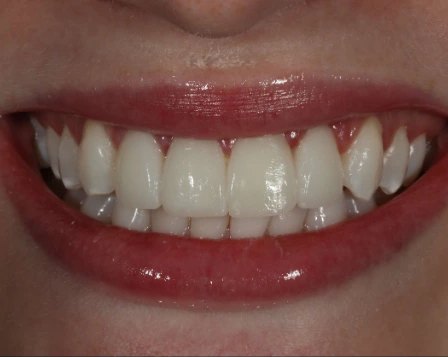
Refinement without sacrifice.
A traditional porcelain veneer requires the dentist to reduce roughly 0.5 to 0.7 mm of enamel so the restoration sits flush with the neighboring teeth. Minimal prep veneers reverse that equation: the porcelain is made thinner and the tooth is barely touched. In many cases only a light polish or a few tenths of a millimeter of surface refinement is needed, and in true no-prep cases the veneer is bonded directly to untouched enamel.
This is possible because of advances in ceramics and adhesive dentistry. Modern pressed and feldspathic porcelains hold their strength and translucency at thicknesses that were not achievable a decade ago, and today’s bonding protocols are strongest on intact enamel. The result is a restoration that is conservative and extremely natural in light.
Minimal prep veneers are not a brand. Names like Lumineers describe one manufacturer’s version; Dr. Veytsman selects the ceramic and the ceramist for each case individually so the material matches the goal, not a marketing label.
The ideal minimal prep patient wants a brighter, more even, or slightly fuller smile and has teeth that are already reasonably well aligned. Because the veneer adds a thin layer rather than replacing one, the technique works best when the teeth are small, set slightly back, worn short, or have gaps to close, situations where adding volume is exactly what the smile needs.
Where teeth are significantly crowded, rotated, or already protrusive, adding porcelain without reduction can make them look bulky. In those cases Dr. Veytsman may recommend a short course of Invisalign first, or a conventional veneer on a few teeth combined with minimal prep on the rest. The decision is made from your digital design, never by default.


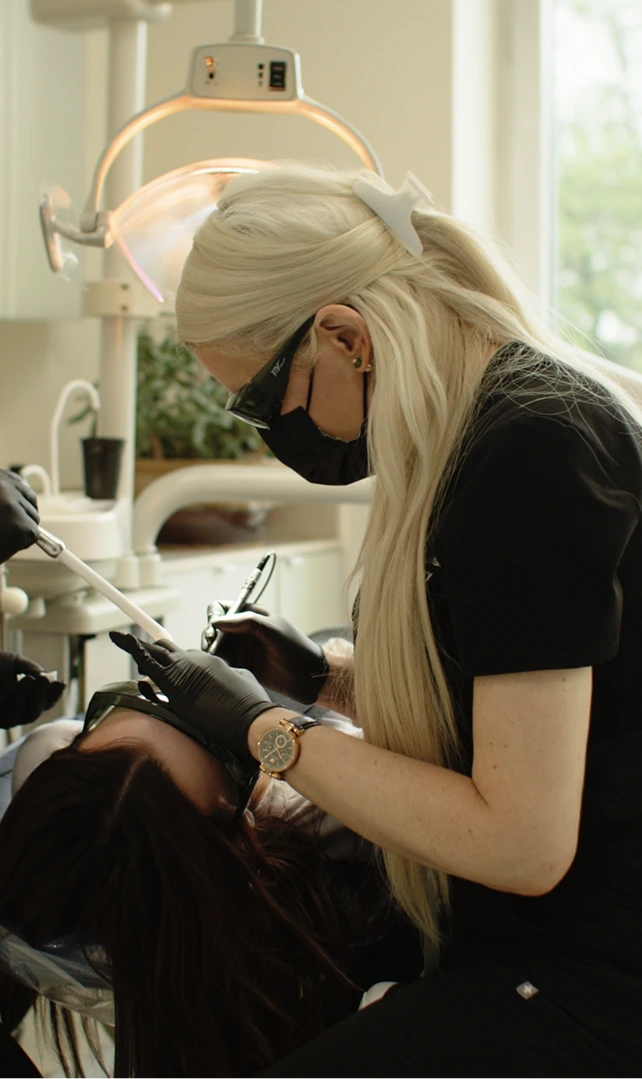
Dr. Veytsman is known for telling patients they need less than they thought. Every veneer case starts with a digital design and a trial smile, so the exact thickness needed in each area of each tooth is known before any instrument touches enamel. Where the design shows that no reduction is required, none is done. Where a few tenths of a millimeter will make the result sit more naturally, only that is refined.
Thin veneers demand precise planning because there is less room to hide error. Dr. Veytsman evaluates lip dynamics, facial midline, and how much tooth shows at rest and in a full smile, then communicates those measurements to master ceramists who layer the porcelain by hand. This is why her minimal prep cases look like beautiful natural teeth rather than a white shell.
Despite their thinness, minimal prep veneers can correct a wide range of aesthetic concerns:
The goal is a smile that looks like the best version of your own teeth: brighter, more balanced, and still unmistakably yours.
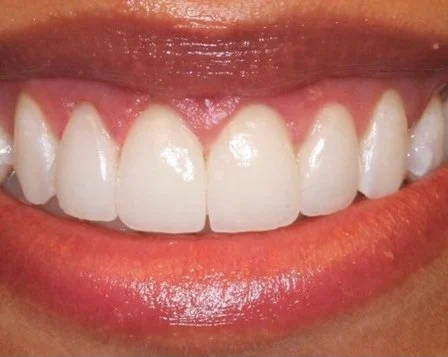
Because the technique is additive, previewing is straightforward. Dr. Veytsman designs your veneers digitally, then places a temporary mock-up directly over your untouched teeth so you can see the new length, shape, and brightness in your own mouth before committing. Adjustments are made until you approve the design, and that approved design is what the ceramist fabricates.
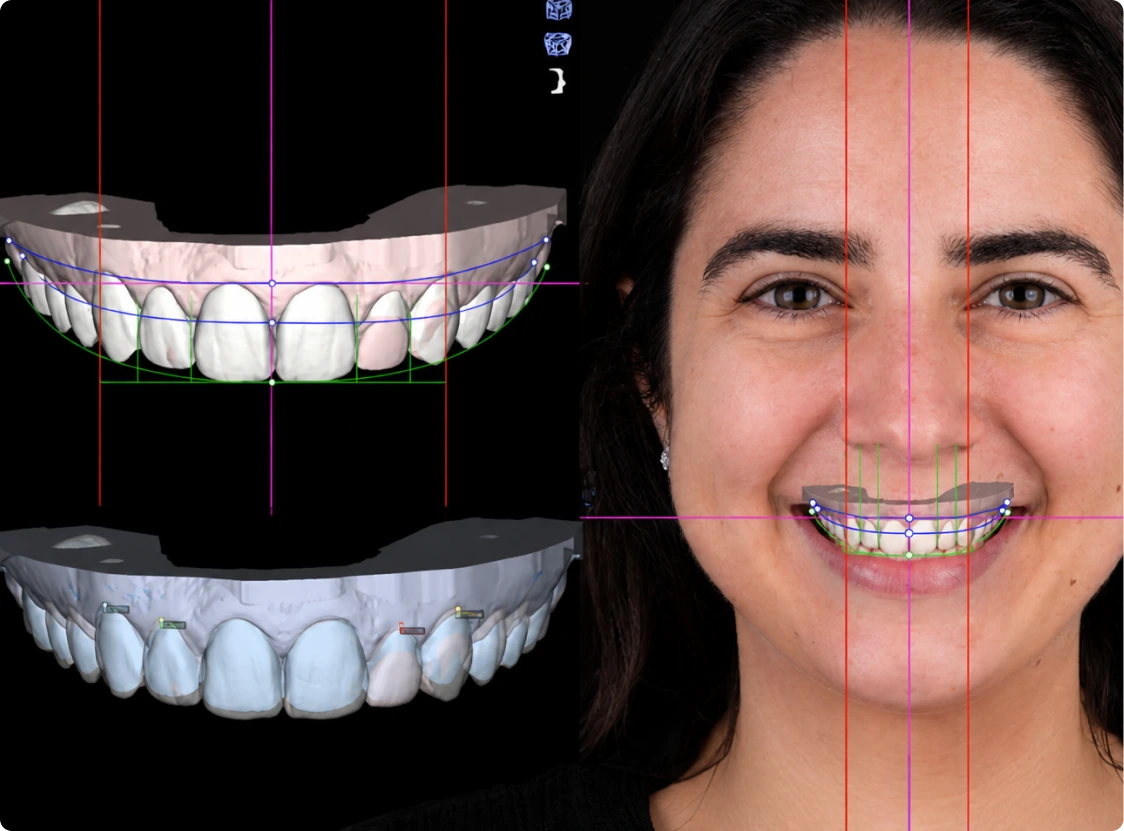
A light refinement of the enamel surface (typically 0.2 to 0.5 mm) so the veneer edges finish seamlessly against the tooth and gum. The most common approach in Dr. Veytsman’s practice because it combines conservation with the control needed for a flawless finish.
Dr. Veytsman rounds any sharp edges and creates a fraction of a millimeter of space; in most cases about 99 percent of the tooth structure is preserved.
Around 0.5 to 0.7 mm of reduction, used when teeth are protrusive, rotated, heavily discolored, or previously restored. Allows the most dramatic change in color and position. Learn more on our porcelain veneers page.

Thin porcelain is unforgiving: shade, translucency, and texture all have to be right the first time. Dr. Veytsman’s cases rely on:
When it is done well, no one can tell where the porcelain begins.
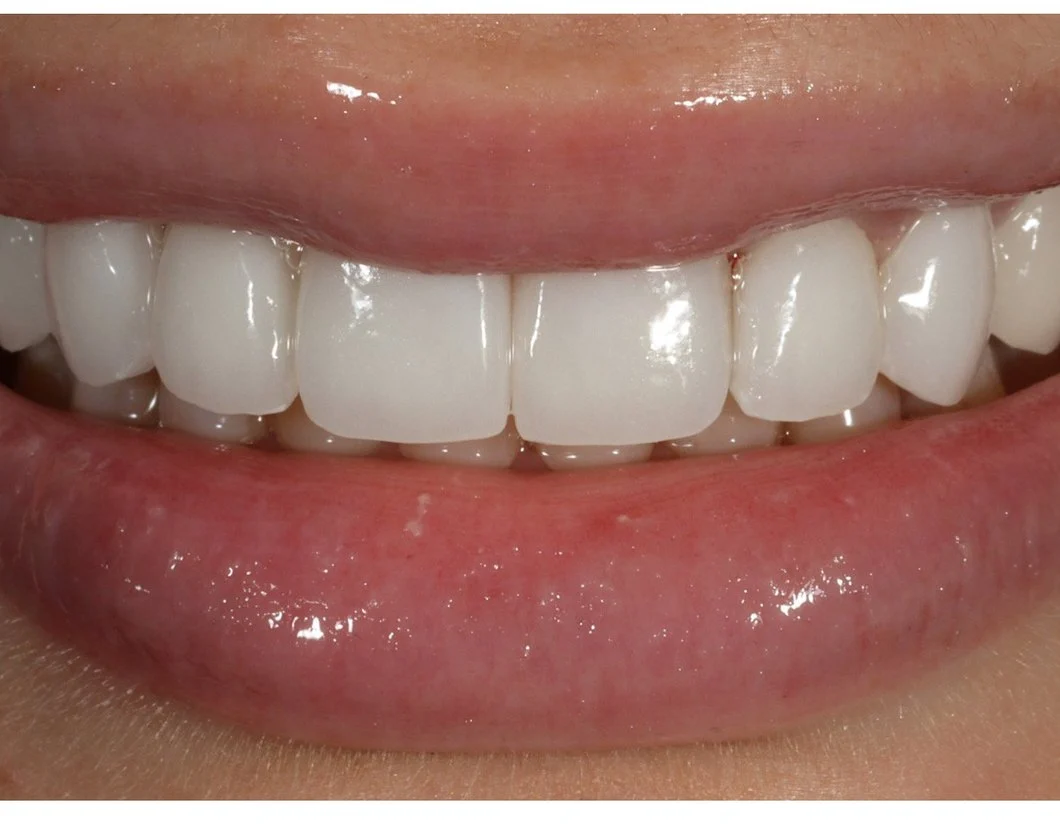
A detailed evaluation of your goals, enamel condition, bite, and facial features, with photographs and a 3D scan. Dr. Veytsman confirms whether minimal prep, no-prep, or a hybrid approach fits your teeth.
The consultation can be held in person or virtually, and if a tooth is better left untouched, Dr. Veytsman will say so.
Master ceramists layer and finish each veneer by hand over one to three weeks. In many minimal prep cases no temporaries are required because your teeth are essentially unchanged.
In New York, Jason J. Kim Lab layers each veneer by hand in feldspathic porcelain so that it carries light the way natural enamel does.

When a smile needs a more significant shift in color, position, or shape, conventional porcelain veneers give Dr. Veytsman the room to achieve it. See how they compare.
Minimal prep and no-prep veneers at Cosmetic Dental Studios typically range from $2,000 to $4,500 per tooth. The final fee depends on the number of teeth, the ceramic selected, and the complexity of the design; a single veneer to match a neighboring tooth is priced differently from a set of eight. Because this is elective cosmetic treatment, insurance rarely contributes, but financing is available through PatientFi and Cherry. You will receive a written, itemized quote after your consultation and digital design.
To plan your case, Dr. Veytsman considers your goals, your face and how many teeth show when you smile and speak, then recommends the fewest veneers that will give you the result you want.